
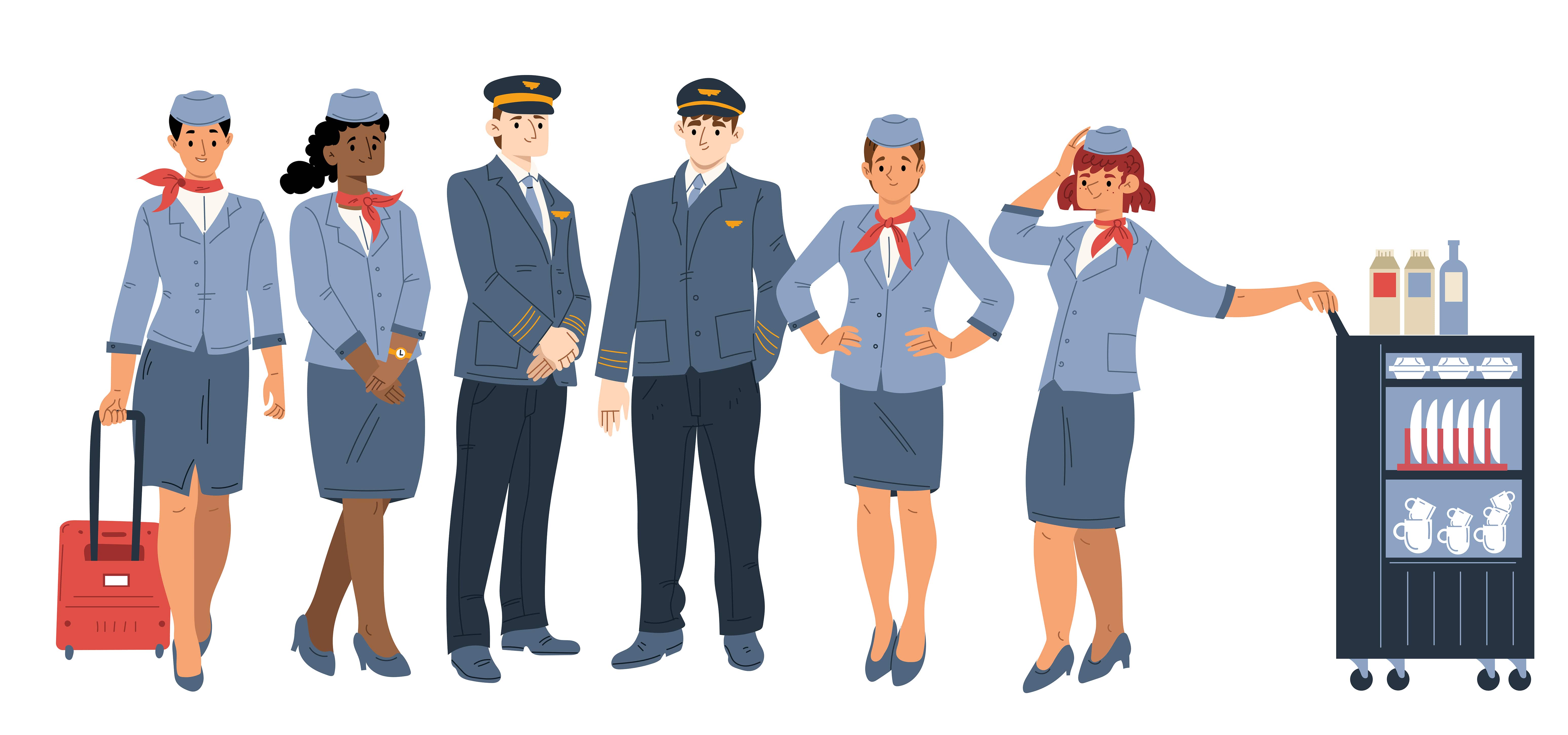
Have you ever been up in the air watching a passing plane and thought that you were on board, as you were welcoming passengers in a poised and confident manner? The image is a dream to many: to work in the skies, to travel the world, to have a career full of fun and meaning.
Working as a member of a cabin crew career does not only include serving meals and putting a clean uniform on. It is having the spirit of an airline, assuring passenger safety, and making memorable travelling experiences. It is a career that is all hospitality, responsibility and adventure in the right measure.
The aviation sector in India is growing at a very high rate, and companies are employing more youthful professionals both within their national companies and in international carriers than ever before.
You have been thinking of doing so, and the year cabin crew career in 2025 may prove to be the right time to enter. Here is a question of what it really takes to make your dream a reality and to have a career that literally lets you fly.
The core of any airline is the cabin crew. They are not just the people who give a warm smile and a perfect groom to passengers; it is much deeper than that. Training is provided to handle emergencies, in-flight medical problems, safety measures, and calmness in situations that are difficult to cope with.
Cabin crew members must be alert and empathetic at all times, whether they are helping old passengers or having to deal with turbulence or even medical emergencies on the plane. They serve as a connection linking the passengers and cockpit as well as providing comfort and focusing on the safety of passengers.
Skill and professionalism are the most important concepts of modern aviation. Air hostess and flight steward have become more or less a single concept; nowadays it can be a job that any person can do, and the opportunities in the industry are gender-neutral. The most important thing is what you communicate, how you stay composed and how you can nurture others in a patient and confident manner.
The first step to becoming a cabin crew career in 2025 professional is the right choice of training path. A number of formal alternatives which can meet various timelines, budgets and long-term objectives are now available in India.
Certificate programmes provide aviation entrance within the shortest possible time to individuals who are willing to commence their studies. These classes concentrate on the basics like in-flight safety, first aid, grooming, communication and hospitality etiquette. The educational process is practical, and the process of gaining confidence and professional presence begins immediately.
Common courses include:
The programmes best suit suitable candidates, regardless of their wish to have practical skills and an early introduction to the airline setting.
Diploma programmes are more comprehensive than the basics. They are passenger psychology, crisis management, aviation laws, and customer service excellence modules. Internships or trips to the airline are also part of many institutes so that they can have real-life experience.
The path will assist you in acquiring leadership and communication skills as well as gaining knowledge of the large aviation ecosystem. People with diplomas are also known to have quicker promotions after employment.
Students with long-term thinking can have a concrete academic and management foundation through such degrees as a B.Sc. in Aviation or a BBA in Aviation Management. You are taught flight operations, service training, airline administration, logistics, and operations management.
Later graduates can transition to supervisory, managerial or training positions. Its choice is also brilliant when you envision yourself having a sustainable career in the aviation industry, not only in cabin service.
Airlines seek individuals who have professional looks, emotional intelligence, and health preparedness. Here are the expectations of most airlines:
Such demands guarantee the efficiency of the crew members in carrying out safety functions without breaching the airline standards.
Training will provide the technical expertise, but it is your personal attributes that will make you successful in the long term. The greatest representatives of cabin crew professions have a set of skills in common:
Soft skills are the covert power which the recruiters are first aware of when they are interviewing.
The life of cabin crew is unpredictable and hectic. On every flight there is a pre-flight briefing where you deliberate on routes, weather, and passenger needs. You check emergency gear, set up the cabin and coordinate with pilots and ground personnel.
When the passengers are on board, it is your task to make them feel safe and welcome. As the flight progresses, you are dealing with meal services, providing answers, and resolving situations in a cool way. Be it the local flight over the domestic territory or the long distance over the international boundary, it is important to be professional in the air throughout the flight until landing.
It is a physically challenging business, but each day we get new stories, destinations, and people. It is one of those few jobs where you never get bored of routine, and with the dawn of each new day, you might be in a new city, a new culture, and a new memory.
Good pay and lifestyle benefits are some of the biggest draws of aviation.
Salaries are normally accompanied by flying allowance, meal and layover allowances, and performance allowance. In addition to salaries, flight tickets are highly reduced, and the crew members are given global exposure and medical coverage.
However, the true reward is the life experience, seeing new nations, meeting people of all walks of life, and other things that no other job can give you to learn.
Cabin crew is not a functional short-term position but rather a start-up to a long-term aviation career. Once you have experience, you will be able to advance to the following positions:
A large number of the professionals also use their flying days to venture into travel consultancy, corporate training or hospitality management. The transfer skills render transitioning into a new career to be easy and fulfilling.
When it comes to entering aviation, it takes hard work and planning. These are the main steps to follow, which will enhance your chances:
The most common procedures during recruitment are group discussions, personal interviews, medical examinations and background checks. It is worth waiting, since it could take a few months between application and final training.
Training develops the technical capacity, but mentorship is what gets you through the challenging hiring process. This is the place where such platforms as Mentrovert come in.
Mentrovert also links aspiring cabin crew with professionals with actual airline experience. Their teachers will coach you on how to prepare for an interview, how to dress up, and how to build confidence.
Based on the practical advice of people who have been inside the company, you get to know the real things that recruiters are seeking, not only on paper but also in personality and attitude.
Cabin Crew Career Pathway is designed to narrow the gap between training and employment. It also dwells on psychological preparedness, presentation and interview psychology – the minor details that can or cannot make the selection.
Joining the cabin crew is not just a job; it is a way of life. It is a life of discipline, elegance and travelling the world. Life comes with new challenges and experiences every day that can influence your personality and expand your perspective toward life.
There is no better job to pursue than to be a traveller in case you are enthusiastic about travelling, enjoy communicating with people, and are able to remain relaxed when you are in a stressful situation.
When equipped with a good attitude and training, plus an appropriate mentor, it is only a matter of time before your career dream of being a professional pilot will turn into your everyday life.
You are now willing to get into your uniform, tie your wings on, and join the clouds, are you? The sky is ready – all you have to do is to jump.
Q1. What if I don’t meet the height requirement?
The reason why airlines establish these limits is due to safety and operation considerations. Nevertheless, job opportunities at an airport in the field of customer service or ticketing can be appropriate substitutes.
Q2. Are tattoos or piercings allowed?
Obvious tattoos or face piercings are not welcome. Tattoos that have been covered are not a problem, but never underestimate the policies of specific airlines.
Q3. Do irregular hours affect personal life?
Yes, it is sometimes difficult at the beginning. The trick is to strike the right balance, take care of rest and find a supportive family member or partner.
Q4. Is customer service experience compulsory?
Not essential, but previous familiarity with hospitality or retail service would be useful in showing your people skills.
Q5. What are common reasons for rejection?
Bad grooming, ignorance about the airline, or jittery body language. The airlines put confidence, warmth and authenticity first.







.jpg)

























































.jpg)


.jpg)


-min.jpg)