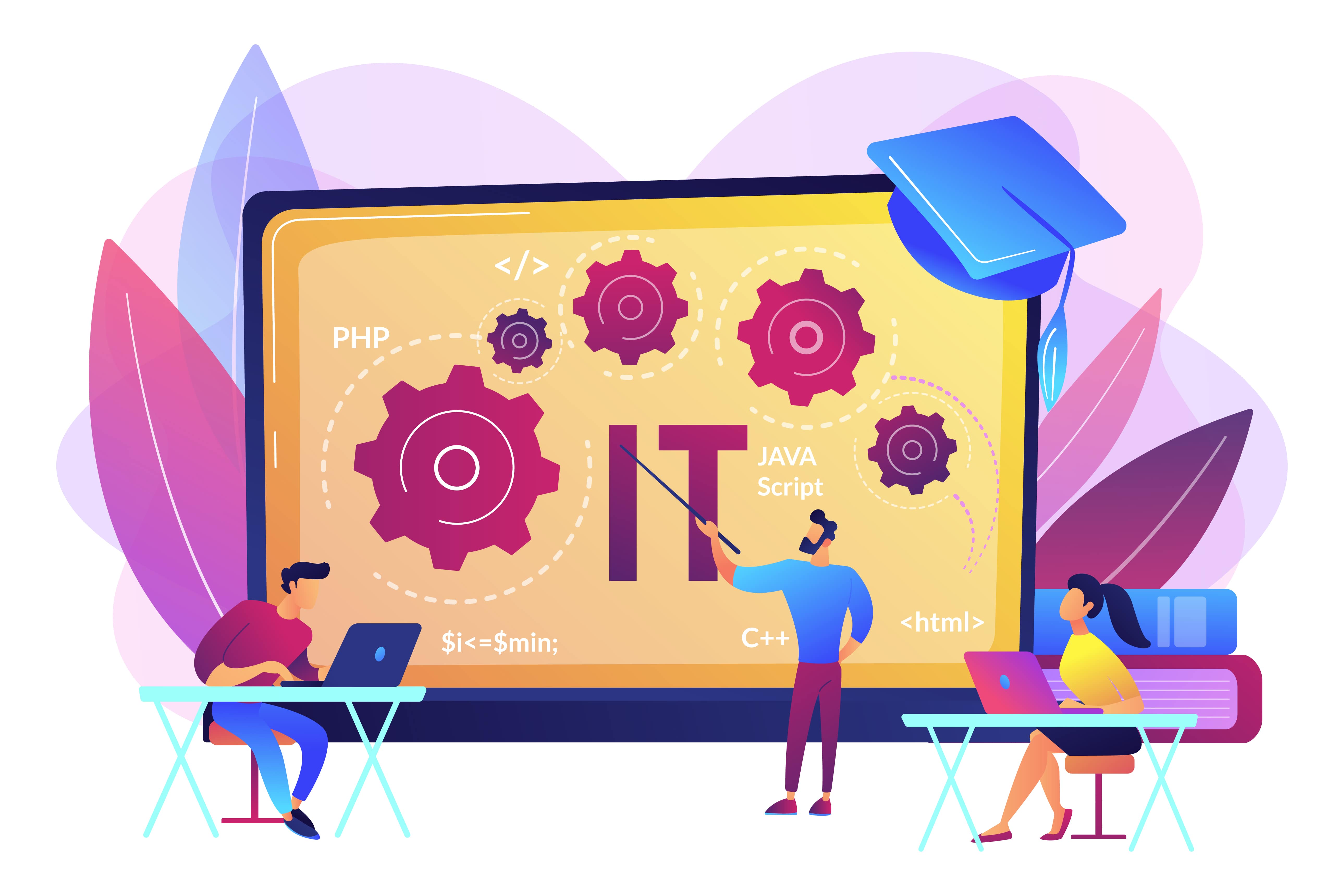


Choosing what to study after 12th grade can feel overwhelming. The choices appear infinite between engineering, management, and new-age tech programmes, not to mention baffling. Because you love technology and do not want to be buried in a hardware laboratory or major in four years of pure engineering, the Bachelor of Computer Applications (BCA) course may be the answer you seek.
BCA Course has been an unspoken yet intelligent option that students consider when entering the IT world without incurring significant expenses or dedicating years to education. It is down-to-earth, adaptable, and highly pertinent to the role of technology in influencing all aspects of contemporary life.
We will take a stroll through everything you must know, starting with what the course is and how to enter and finally what careers await you after you leave.
BCA Course is a three-year career-oriented course that focuses on the practical applications of software. In contrast to engineering, which delves deeper into the world of hardware and intricate electronics, BCA focuses on applications, coding, and software development.
Over the course of these three years, students will transition not only to developing full-fledged software systems but also to programming. You will be taught how to create code, manage databases, work with networks, and become familiar with emerging technologies such as cloud computing and artificial intelligence.
The aspect that is attractive about this course is the practical nature of learning. It is not just about reading about programming, but about actually building things. Every program you do, starting with your first C program to your final year, is to help you prepare yourself to enter professional life.
Let’s be honest—cost matters. An engineering degree can be priced efficiently between ₹81000 and ₹ 20 lakhs, whereas most BCA programmes would cost between ₹ 90000 and ₹ 6 lakhs as the total course fee. That is an enormous saving, given that both result in similar entry-level IT positions.
BCA students complete their studies one year earlier than engineering students. A year is a head start, whether it's your first job, freelance experience, or postgraduate studies, such as an MCA or MBA.
BCA is offered online in many universities as a distance learning or part-time program. This flexibility enables working professionals or students from smaller towns to take the course without needing to relocate or interrupt their careers.
To study BCA, you do not have to be a topper in science. Commerce or arts students can also apply, provided they are interested in computers and logic. The programme begins at the very beginning, and therefore, previous experience in programming is not required; only curiosity and consistency are needed.
Admission procedures differ slightly from college to college, but here’s a clear breakdown:
You must have finished your 12th grade in a board that is recognised with at least 45 to 50% grades. A considerable number of colleges may be open to any stream, although some prefer students to have studied mathematics or computer science.
Apply to a mix of both—some merit-based colleges and a few entrance-based ones. That way, you’ll have multiple options when the results come out.
You will begin with computer languages such as C and C++, mathematics and computer basics. This is also taught early in communication and professional writing since it is as helpful as writing code.
This step will introduce you to Java, data structures, operating systems and databases. You will start creating entire applications and start learning how actual software systems are designed and operated.
The last year tends to include higher-level courses in cloud computing, software engineering, web development, or cybersecurity. You will also do one significant project or internship, and this is usually what is highlighted on your resume.
The most significant benefits of a BCA course are that you can major in what you like and what you want to achieve with your life.
New BCA graduates usually get 3-6 lakh per year, based on their skills and location. Large IT centres such as Bengaluru, Hyderabad, and Pune typically have comparatively better packages.
After two or three years of experience and other certifications, the salary may increase to 8-10 lakhs and more. In the IT sector, regular studying and expertise are more highly valued than a particular degree name.
Many BCA graduates also freelance as app or web developers and earn handsomely by taking up projects online.
Technology powerhouses and Indian companies such as TCS, Infosys, Wipro, Cognisant, Amazon, Flipkart, and Paytm are known to employ BCA graduates on a regular basis. Even startups are eager to use young, enthusiastic tech workers who can learn quickly and produce results.
Colleges educate you on the curriculum, but mentorship educates you on career orientation. The presence of a professional guide, somebody who is already in the IT business, might assist you in making more intelligent decisions regarding electives, internships, and skill development.
Mentoring sites such as Mentrovert help you get a personalised mentor who will work with you on personalised advice, interview preparation, and career roadmaps according to your personal objectives.
Be Curious: Technology is dynamic – continue to learn new tools, languages and frameworks to remain relevant.
BCA course is a good starting point when you are attracted to technology, like solving problems, and when you are willing to choose a career where creativity and logic are combined. It is also affordable, convenient, and opens many doors, such as development and data, cybersecurity, and management.
It is not the degree itself that makes you successful; it is the activity that you apply in those three years to develop, to explore and to learn. BCA can be much more than a qualification; with inquisitiveness, discipline and proper guidance, it can be the catapult to a lifetime of working in technology.
Q1. Are BCA degrees as valuable as engineering degrees?
Absolutely. The IT industry values skill over degree titles. If you’re good at what you do, opportunities will follow—whether you hold a BCA or a B.Tech.
Q2. Can I study BCA online or through distance learning?
Absolutely. The IT sector values talent more than degrees. When you are good at something, chances will come your way, with or without a BCA or a B.Tech.
Q3. Which programming languages should I focus on during BCA?
Start with C, C++, and Java. Then add Python and JavaScript for web and data applications. Don’t chase too many languages—focus on mastering problem-solving.
Q4. What government opportunities exist for BCA graduates?
Some government departments, including NIC and PSU banks, hire BCA graduates for IT roles. Still, the private sector provides more variety and growth potential.
Q5. Should I go for a top college for BCA or MCA?
Either works. If you get into a top BCA college, you’ll have early access to quality placements. If not, aim for a reputed MCA later. The key is to keep upgrading your skills.








.jpg)


























































.jpg)


.jpg)


-min.jpg)