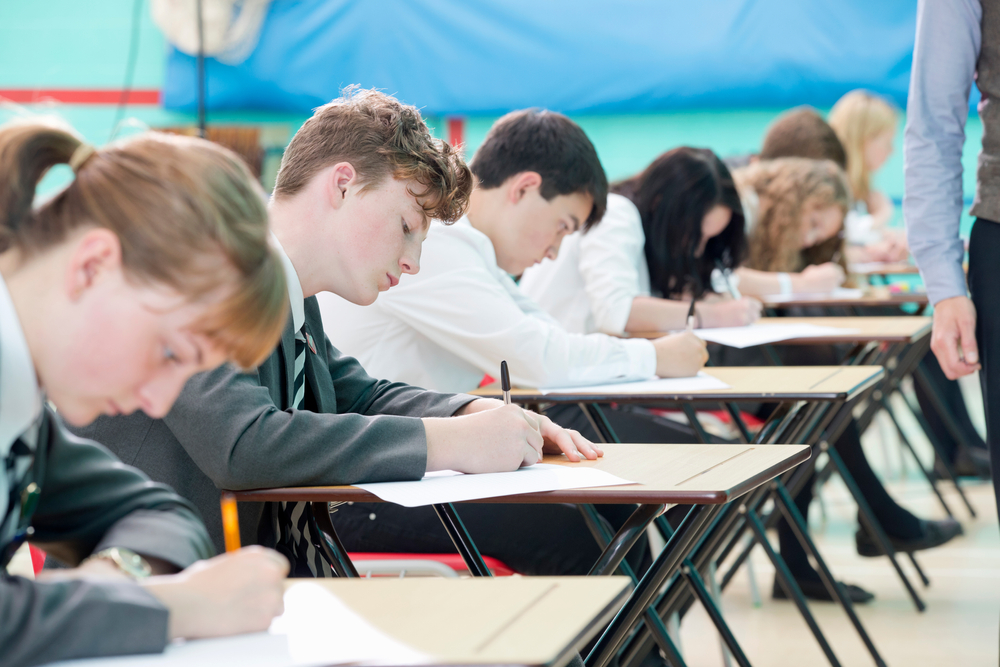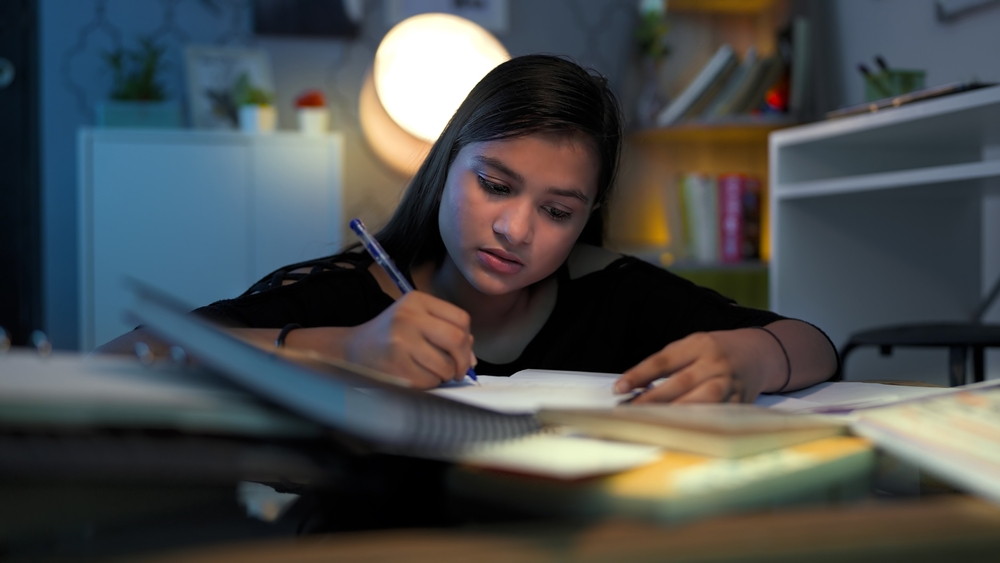


Balancing Class 12 boards and JEE preparation can be difficult initially, but once you get on the right track, it becomes easier. And it is done by thousands of students every year, and you can do it. You do not have to study 15 hours a day and sacrifice everything you enjoy; you need an effective schedule and the right attitude.
To start with, we will clear up something. Class 12 boards and JEE are not adversaries; they are friends! CBSE boards and JEE Main have a standard syllabus of approximately 70-80%. This is because, by studying one, students are, in effect, preparing for the other.
The actual problem is not the amount of work. It is about time management and knowing how to put first things first.
What makes these exams different? Before we dive into strategies:
Board exams are used to assess knowledge of the whole syllabus. Questions are less complex, and the students should provide elaborate answers. College admissions consider board marks, and thus, they cannot be neglected.
JEE tests are based on the ability of the students to solve problems quickly and correctly. The questions are more challenging, and they have to think hard about things. In addition, JEE discusses issues that may not be covered in boards.
The awareness of these differences is the one that assists students in preparing differently for each exam.
This is when Class 12 starts. One need not worry about JEE yet. They should concentrate on everything that is taught in class. During the lectures, one must pay attention, do the homework on time, and clarify doubts instantly.
Students ought to begin reading books that are published by NCERT. These are board exams and JEE Main gold books. The questions in JEE are many, and most of them are based on NCERT concepts.
Time to gear up now. The curriculum of the school rushes, and the students must keep up with it.
To begin, attempting board papers and sample papers of the past year gives one an idea of the exam pattern and the type of questions.
In JEE preparation, it is advisable to start with reference books at the basic level problems. It is not a good idea to jump to higher questions. Skills in problem-solving should be developed slowly.
Board pre-board exams and board practicals are near. The two months are very vital in balancing the two preparations.
They should now take equal time in exams. The mind is fresh in the morning, and study boards are best when that is the case. And in the evening, it is best to rehearse JEE problems.
Pretest exams are to be taken seriously. They demonstrate the position of students and what requires further efforts.
After mid-January, all attention should turn to boards. Board exams are now the time to achieve.
This does not imply forgetting the JEE. The right balance is spending 70% of the time on boards and 30% on JEE. Significant JEE concepts and formulas also ought to be done on a daily basis, even when it is an hour long.
After mid-January, all attention should turn to boards. Board exams are now the time to achieve.
This does not imply forgetting JEE. The right balance is spending 70% of the time on boards and 30% on JEE. Significant JEE concepts and formulas also ought to be done on a daily basis, even when it is an hour long.
This can't be stressed enough. NCERT books are the foundation for both exams. They should be read thoroughly and repeatedly—like novels.
For boards, NCERT gives everything needed. For JEE Main, nearly 40-50% of questions are NCERT-based. Even for JEE Advanced, NCERT builds the conceptual clarity required.
Important points should be marked, every exercise question solved, and the theory understood deeply.
Those fancy timetables that never get followed shouldn't be made. Being practical is key.
Studying in blocks of 90 minutes with 15-minute breaks works better. The brain functions more efficiently this way. Specific subjects should be assigned to specific times based on energy levels.
For morning people, studying physics and maths when the brain is fresh is ideal. Easier subjects like chemistry theory can be saved for later.
Sundays should be kept flexible. They can be used to cover anything missed during the week or to relax.
This is crucial for JEE success. Formulas and steps shouldn't just be memorised. Understanding why they work is important.
When studying a concept, these questions should be asked: Why does this happen? How does this connect to what was learnt before? Can this be explained to someone else?
This deep understanding helps solve tricky JEE questions and also makes board exams easier.
For JEE, solving problems is everything. Starting with easy questions and gradually moving to tougher ones is the way to go.
Problems shouldn't just be solved—they should be analysed. When something goes wrong, understanding why is essential. What concept was missed? What silly mistake was made?
A mistake diary should be maintained. All mistakes should be written down and reviewed before exams.
For boards, practising writing answers within time limits is important. Board exams test speed too!
Physics is all about understanding concepts through visualisation. Reading about projectile motion isn't enough—it needs to be imagined happening.
Diagrams should be drawn for every problem. This helps in both understanding and presentation.
For boards, focus should be on derivations and diagram accuracy. For JEE, focus should be on numerical problem-solving and application-based questions.
Chemistry is divided into physical, organic, and inorganic. Each needs a different approach.
Physical chemistry is math-heavy. Numerical problems should be practised daily. Organic chemistry needs an understanding of mechanisms. All reactions should be drawn and understood. Inorganic chemistry requires memory. Colourful charts should be made and revised regularly.
For boards, NCERT is sufficient. For JEE, reference books are needed for additional practice.
Math is pure practice. There's no shortcut here.
Starting with NCERT examples, then moving to exercises, then reference books—this sequence should always be followed.
For boards, presentation matters. All steps should be shown clearly. For JEE, speed and accuracy matter more.
Calculus, algebra, and coordinate geometry should be focused on—these carry maximum weightage in JEE.
Sleeping requires 7-8 hours per day. Learning is consolidated in the brain when one is asleep. Reducing sleep to study more will actually reduce the productivity of the students.
When you feel sleepy, you should have a 20-minute power nap rather than struggling through it.
The brain needs fuel to work. Healthy and regular meals should be taken. The diet should include nuts, fruits and plenty of water.
Junk food and caffeine must be avoided. They provide a short-term burst of energy and crash the system in the future.
The study hours are long, and movement should not be overlooked. Fifteen minutes of jogging, stretching, or some sport will help.
Exercise will help people to stress less and to be more focused. A difference of even 30 minutes per day is massive.
The study hours are long, and movement should not be overlooked. 15 minutes of jogging, stretching, or some sport will help.
Exercise will help people to stress less and to be more focused. A difference of even 30 minutes per day is massive.
Preparation is as much about mindset. It is important to remain positive and have faith in a person.
Some days will be tough. There are things that are not going to be clear. That's part of the process. Giving up isn't an option.
Minor achievements must be praised. Complete a challenging chapter? Scored well in a test? Credit should be given!
Balancing Class 12 boards and JEE preparation is not only about academics, but it is also about making sound choices, stress management, and ensuring that you remain mentally sound in this strenuous period.
The Mentrovert enters at this juncture as the ideal companion.
In Mentrovert, the exact problems that students encounter are known. CBSE students have been assisted in coping with this important stage successfully by hundreds. The seasoned professionals among the counsellors are familiar with the system of Indian education to the utmost and give individual advice in accordance with specific needs.
You need assistance in developing a study plan, are feeling stressed about exams, are picking the best coach, or need someone to talk to once things become overwhelming – Mentrovert will be there.
Ready to be in charge of preparation and peace of mind?
One decision is the beginning of a success story. Allow Mentrovert to take students through this.
Q1: Which one should I pay more attention to, boards or JEE?
Both matter. The same attention is required between April and January, as the syllabus is similar. Since February, allocate additional time to boards. Once boards are over, go all JEE. Good board marks are also useful for admission to colleges.
Q2: Does JEE need coaching, as it manages boards?
Discipline and frequent tests would be facilitated by coaching, though it would not be mandatory. Self-study would make many students successful, provided that they are consistent and that their doubts are clear as time goes by. Select what suits your style of learning.
Q3: What is the number of hours that I should study per day?
Goal: 6-8 focused hours (on average) in the course of regular months, in school. This could reach up to 8 and 10 hours during exam months. When giving breaks, always get a lot of sleep and never short-change sleep, as it will make you less productive.
Q4: Will I be able to get 95% in boards, preparing for JEE?
Yes, it's very possible. NCERT is interrelated with the basics of JEE, and thus, one prepares the other. Scoring above 95 can be done through regular revision, practice papers and time management.
Q5: What should I do in case I am too stressed or anxious?
Stress is normal. Communicate with a person you can confide in, rest, sleep, and be active. In case anxiety is a part of your everyday life, seek professional assistance. The mentor also takes care of the students who are encountering exam pressure.






.jpg)